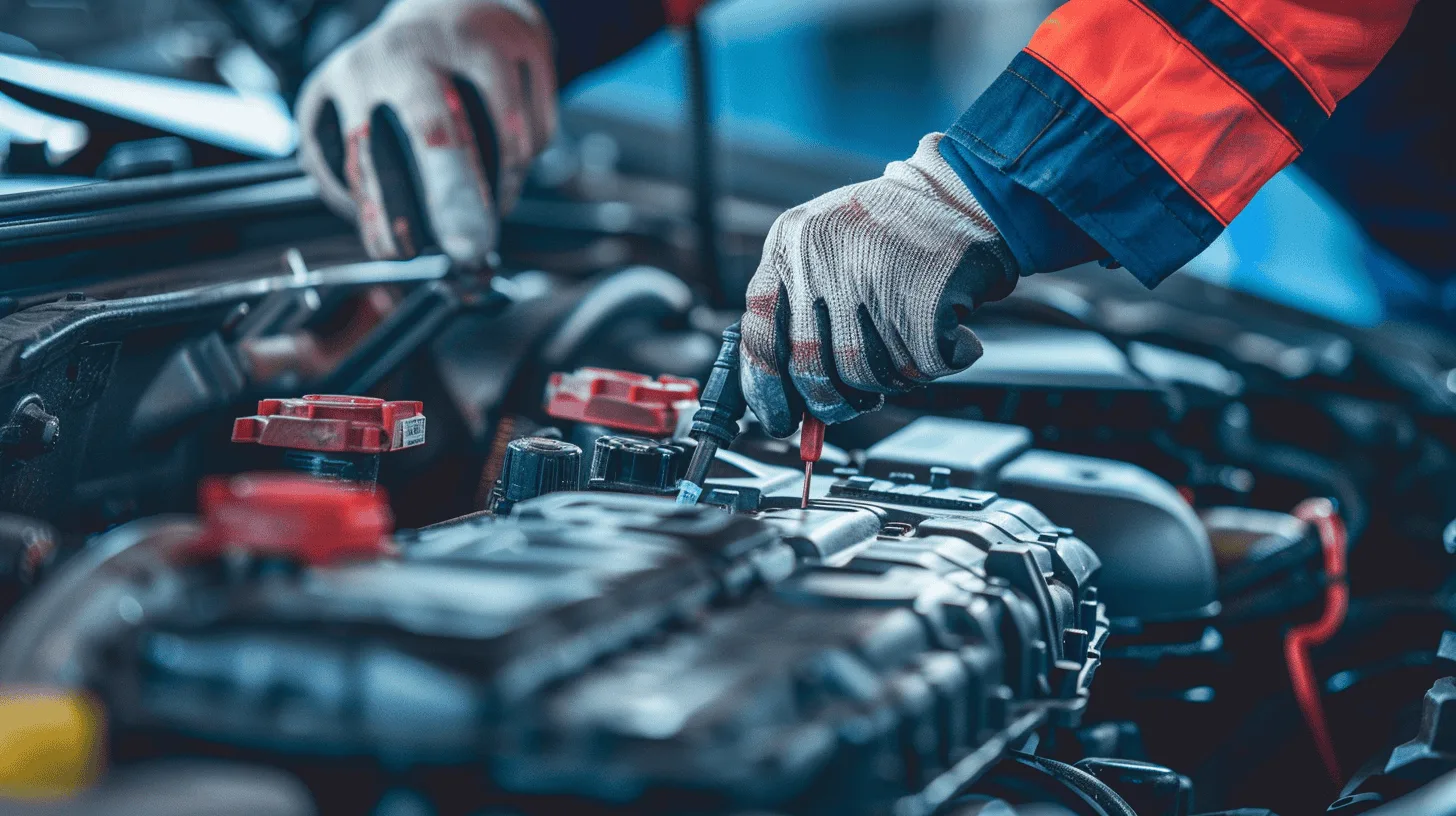
Understanding the Basics of Battery Care for Your Vehicle
Understanding the Basics of Battery Care: Complete Technical Guide for Vehicle Maintenance
Introduction: The Critical Role of Battery Health in Vehicle Reliability
Your vehicle's battery serves as both the starting power source and electrical system stabilizer, managing voltage fluctuations while supporting dozens of electronic control units that modern vehicles depend on. A properly maintained battery typically lasts 3-5 years, but neglect can reduce this to 1-2 years, while exceptional care can extend life to 6-7 years. Understanding battery chemistry, electrical diagnostics, and maintenance procedures can prevent the average driver from experiencing 2-3 battery-related failures during their vehicle ownership period.
This comprehensive guide provides scientifically-based maintenance procedures, diagnostic techniques using professional and DIY methods, and detailed explanations of battery failure modes. We'll examine how environmental factors, driving patterns, and vehicle systems affect battery longevity, providing specific data and procedures rather than general advice.
Battery Chemistry and Electrical Fundamentals
Lead-Acid Battery Operation Principles
Chemical Reactions and Energy Storage
Discharge Reaction (Providing Power):
Negative plate: Pb + SO₄²⁻ → PbSO₄ + 2e⁻
Positive plate: PbO₂ + 4H⁺ + SO₄²⁻ + 2e⁻ → PbSO₄ + 2H₂O
Net reaction: Pb + PbO₂ + 2H₂SO₄ → 2PbSO₄ + 2H₂O + Energy
Charge Reaction (Storing Energy):
Reverse of above with electrical input:
2PbSO₄ + 2H₂O + Energy → Pb + PbO₂ + 2H₂SO₄
What This Means Practically:
- During discharge, lead sulfate forms on both plates
- Sulfuric acid converts to water, reducing specific gravity
- Reversible process... until sulfation becomes permanent
- Each cell produces 2.1V nominal (12.6V total for 6 cells)
Understanding Battery Specifications
Key Ratings and Their Significance
Cold Cranking Amps (CCA):
- Current deliverable for 30 seconds at 0°F (-18°C)
- Voltage maintained above 7.2V during test
- Typical ranges: 400-850 CCA for passenger vehicles
- Degrades 1-2% annually with age
Reserve Capacity (RC):
- Minutes battery supplies 25A before dropping below 10.5V
- Typical: 90-150 minutes for standard batteries
- Indicates deep discharge capability
- Critical for emergency situations
Amp-Hour Rating (Ah):
Calculation: Ah = Current (A) × Time (hours)
Example: 75Ah battery delivers:
- 75A for 1 hour
- 7.5A for 10 hours
- 3A for 25 hours (Peukert effect reduces actual)
Comprehensive Diagnostic Procedures
Visual Inspection Protocol
Physical Condition Assessment
Inspection Checklist with Failure Indicators:
| Component | Normal Condition | Warning Signs | Critical Issues |
|---|---|---|---|
| Case | Uniform color, intact | Discoloration | Cracks, bulging |
| Terminals | Clean metal | White/green buildup | Heavy corrosion |
| Cables | Flexible, intact | Stiff insulation | Exposed wires |
| Hold-down | Secure, no movement | Slight looseness | Missing/broken |
| Vents | Clear openings | Partial blockage | Sealed/clogged |
| Electrolyte | Above plates | At plate level | Below plates |
Corrosion Analysis and Chemistry
Types of Terminal Corrosion:
White Powder (Lead Sulfate):
- Indicates undercharging
- High resistance connection
- Chemical formula: PbSO₄
- Solution: Clean and verify charging system
Blue-Green Crystals (Copper Sulfate):
- Copper cable corrosion
- Indicates overcharging typically
- Chemical formula: CuSO₄
- Solution: Replace cables, check voltage regulator
Electrical Testing Procedures
Voltage Testing Standards
Digital Multimeter Testing:
State of Charge by Voltage (at 77°F/25°C):
12.66V+ = 100% charged
12.45V = 75% charged
12.24V = 50% charged
12.06V = 25% charged
11.89V = 0% charged (discharged)
Temperature Compensation:
Adjust 0.003V per °F from 77°F
Example at 32°F:
Base reading: 12.45V
Adjustment: (77-32) × 0.003 = +0.135V
Actual SOC voltage: 12.585V (still ~75%)
Load Testing Procedures
Professional Load Test Protocol:
- Ensure full charge (12.6V+ resting)
- Apply load = CCA ÷ 2 for 15 seconds
- Monitor voltage during load
- Pass criteria: Stays above 9.6V at 70°F
Temperature Adjustment Table:
| Temperature | Minimum Voltage |
|---|---|
| 70°F (21°C) | 9.6V |
| 50°F (10°C) | 9.5V |
| 30°F (-1°C) | 9.4V |
| 0°F (-18°C) | 9.1V |
Conductance Testing Technology
Modern Electronic Testing:
- Measures internal conductance in Siemens
- Non-invasive (no high current required)
- Detects sulfation and plate deterioration
- Provides CCA estimate and SOH percentage
Interpretation Guidelines:
- 100-85% SOH: Good battery
- 84-75% SOH: Marginal, monitor closely
- Below 75% SOH: Replace recommended
Specific Gravity Testing (Flooded Batteries)
Hydrometer Measurements
Specific Gravity vs State of Charge:
| Specific Gravity | State of Charge | Cell Condition |
|---|---|---|
| 1.265+ | 100% | Excellent |
| 1.225 | 75% | Good |
| 1.190 | 50% | Fair |
| 1.155 | 25% | Poor |
| Below 1.120 | 0% | Discharged |
Cell Variation Analysis:
- Maximum acceptable difference: 0.050
- 0.050 indicates failing cell
- Equalization charging may help
- Replace if equalization fails
Understanding the Basics of Battery Care for Your Vehicle
Terminal Cleaning and Protection
Proper Cleaning Technique
Materials Required:
- Baking soda (1 tablespoon per cup water)
- Wire brush or terminal cleaner
- Protective equipment (gloves, glasses)
- Petroleum jelly or commercial protectant
- Clean water for rinsing
Step-by-Step Procedure:
- Safety First:
- Remove negative terminal first
- Then positive (prevents shorts)
- Never touch both terminals simultaneously
- Neutralize Acid:
Baking soda solution: NaHCO₃ + H₂SO₄ → Na₂SO₄ + H₂O + CO₂ Bubbling indicates neutralization occurring - Mechanical Cleaning:
- Wire brush terminals to bright metal
- Clean cable ends internally
- Remove all corrosion products
- Rinse with clean water
- Protection Application:
- Dry completely
- Apply thin layer petroleum jelly
- Or use commercial spray protectant
- Reconnect positive first, then negative
Electrolyte Maintenance (Serviceable Batteries)
Proper Fluid Levels
Checking and Filling Procedure:
- Remove vent caps (twist or pry carefully)
- Check level - should cover plates by 1/2"
- Add only distilled water (never acid)
- Fill to bottom of fill tube
- Replace caps securely
Water Loss Calculations:
Normal loss: 1-2 oz per cell per month (summer)
Excessive loss (>4 oz/month): Indicates overcharging
Minimal loss: May indicate undercharging
Charging System Verification
Alternator Output Testing
Engine Running Tests:
At Idle (650-750 RPM):
- Voltage: 13.5-14.2V typical
- Current: 30-50% of rated output
- Indicates basic function
At 2000 RPM:
- Voltage: 13.8-14.8V optimal
- Current: 70-90% of rated output
- Full charging capability
Voltage Regulator Limits:
- Below 13.5V: Undercharging
- Above 14.8V: Overcharging
- Temperature compensated: -0.022V/°F above 77°F
Environmental and Usage Factors
Temperature Effects on Battery Performance
Capacity vs Temperature Relationship
Available Capacity at Various Temperatures:
| Temperature | Available Capacity | CCA Performance | Chemical Activity |
|---|---|---|---|
| 80°F (27°C) | 100% | 100% | Optimal |
| 50°F (10°C) | 85% | 85% | Good |
| 32°F (0°C) | 65% | 70% | Reduced |
| 0°F (-18°C) | 40% | 45% | Significantly reduced |
| -20°F (-29°C) | 20% | 25% | Minimal |
Arrhenius Equation Application:
For every 15°F increase, chemical reaction rate doubles
Result: Higher temperatures = faster degradation
Optimal storage: 50-70°F for maximum life
Driving Pattern Impact Analysis
Short Trip Syndrome
Energy Balance Calculation:
Starting Energy Required:
- Typical start: 200-400A for 2-3 seconds
- Energy used: ~0.5-1.0 Ah per start
- Recovery time at 13.8V/30A: 2-4 minutes
Problem Scenario:
Daily pattern: 5 short trips of 5 minutes each
Energy deficit: 5 Ah used - 2.5 Ah recovered = -2.5 Ah/day
Weekly deficit: -17.5 Ah
Result: Chronic undercharging, sulfation
Solution Requirements:
- Weekly 30+ minute highway drive
- Or monthly maintenance charging
- Or battery tender for daily charging
Parasitic Draw Diagnosis
Measuring and Identifying Drains
Acceptable Parasitic Draw Limits:
| Vehicle Age/Type | Maximum Draw | Typical Sources |
|---|---|---|
| New luxury | 50-85 mA | Multiple modules |
| New standard | 30-50 mA | Basic electronics |
| 5-10 years | 30-40 mA | ECU, radio memory |
| 10+ years | 20-30 mA | Minimal systems |
| Classic cars | 5-10 mA | Clock only |
Testing Procedure:
- Vehicle off, all doors closed
- Wait 30 minutes for modules to sleep
- Connect ammeter in series with negative cable
- Read current draw
- Pull fuses individually to isolate circuit
Common Parasitic Draw Sources:
- Glove box light staying on: 200-500 mA
- Trunk light malfunction: 500-1000 mA
- Aftermarket stereo: 100-300 mA
- Faulty alternator diode: 200-400 mA
Advanced Battery Technologies
AGM (Absorbed Glass Mat) Batteries
Special Maintenance Requirements
AGM Characteristics:
- No free electrolyte (absorbed in fiberglass mats)
- Lower internal resistance (5-10 mΩ vs 10-15 mΩ flooded)
- Faster charging (5x faster acceptance rate)
- Deep cycle capable (200+ cycles to 50% DOD)
- Mounting flexible (any orientation except inverted)
Charging Requirements:
- Maximum voltage: 14.7V (vs 14.8V flooded)
- Float voltage: 13.6V (vs 13.2V flooded)
- No equalization charging
- Temperature compensation critical
Enhanced Flooded Batteries (EFB)
Start-Stop System Optimization:
- 2x cycling capability vs standard flooded
- Improved charge acceptance for regenerative braking
- Carbon additives reduce sulfation
- Polyester scrim supports active material
- Cost: 30-50% more than standard
Lithium Iron Phosphate (LiFePO4) Options
Automotive Applications:
| Characteristic | LiFePO4 | Lead-Acid |
|---|---|---|
| Weight | 30% of lead | 100% |
| Cycles | 2,000-5,000 | 300-500 |
| Self-discharge | 2%/month | 5%/month |
| Voltage | 13.2V nominal | 12.6V nominal |
| Cost | 3-4x higher | Baseline |
| Cold performance | Reduced <32°F | Better |
Failure Mode Analysis
Common Failure Mechanisms
Sulfation Process
Progressive Sulfation Stages:
- Soft Sulfation (Reversible):
- Small PbSO₄ crystals
- Responds to equalization charging
- 15.5V for 2-4 hours dissolves
- Hard Sulfation (Permanent):
- Large crystalline structure
- High electrical resistance
- Prevents normal charging
- Requires pulse desulfation or replacement
Prevention Protocol:
- Maintain >12.4V always
- Monthly full charging
- Avoid deep discharges
- Use maintenance charger if stored
Grid Corrosion
Positive Grid Oxidation:
Pb + 2H₂O → PbO₂ + 4H⁺ + 4e⁻
Result: Grid becomes brittle, breaks
Accelerated by: Overcharging, high temperature
Timeline: 4-6 years typical
Stratification in Flooded Batteries
Acid Density Layering:
- Heavy acid sinks to bottom
- Light acid rises to top
- Causes uneven plate wear
- Bottom cells overwork
Correction Procedure:
- Equalization charge monthly
- Or controlled overcharge at 15.5V
- Creates gas bubbles for mixing
- Monitor temperature (<115°F)
Seasonal Maintenance Protocols
Winter Preparation
Cold Weather Readiness
Pre-Winter Checklist:
- Load test at current temperature
- Clean and protect terminals
- Verify full charge (12.6V+)
- Check alternator output
- Inspect/tighten hold-down
- Test block heater (if equipped)
Battery Warmer Options:
- Blanket style: Wraps around battery
- Plate style: Sits under battery
- Power consumption: 50-80 watts
- Activation: -10°F or below
- Benefit: 20-30% more cranking power
Summer Considerations
Heat Management Strategies
High Temperature Protection:
- Insulation shields reduce under-hood heat
- Ventilation improvements help cooling
- More frequent water checks (monthly)
- Parking in shade when possible
- Battery temperature monitoring (<115°F)
Evaporation Rate Data:
At 77°F: 1 oz/cell/month normal
At 95°F: 2-3 oz/cell/month expected
At 110°F: 4-5 oz/cell/month concerning
Action: Check monthly in summer
Replacement Decision Matrix
When to Replace vs Repair
Economic Analysis
Replacement Indicators:
| Test Result | Action | Cost Analysis |
|---|---|---|
| Failed load test | Replace | New battery < repeated jump starts |
| Below 75% SOH | Replace | Reliability worth cost |
| 4+ years old, marginal | Replace | Preventive replacement |
| Cracked case | Replace | Safety hazard |
| 2+ dead cells | Replace | Not repairable |
| Severe sulfation | Replace/Attempt recovery | 30% success rate |
Total Cost Considerations:
New battery: $100-250
Installation: $20-50
Pro-rated warranty: -$20-50
Lost time/towing: $100-200 avoided
Decision: Replace at first signs of failure
Battery Selection Criteria
Matching Requirements
Critical Specifications:
- Group Size (BCI standard):
- Physical dimensions must fit
- Terminal configuration correct
- Height clearance verified
- CCA Rating:
- Meet or exceed OEM specification
- Add 10-20% for cold climates
- Add 20-30% for diesel engines
- Reserve Capacity:
- Minimum 90 minutes standard
- 120+ minutes for high-accessory vehicles
- Technology Type:
- Standard flooded: Basic applications
- AGM: Start-stop, high-vibration
- EFB: Mild hybrid systems
Professional Maintenance Schedule
Comprehensive Service Intervals
Monthly Inspections (5 minutes)
- Visual check for damage
- Verify secure mounting
- Look for corrosion
- Check warning lights
Quarterly Service (15 minutes)
- Clean terminals
- Test voltage
- Check electrolyte (if serviceable)
- Inspect cables
Semi-Annual Service (30 minutes)
- Load test battery
- Test charging system
- Check parasitic draw
- Clean battery tray
Annual Service (45 minutes)
- Professional conductance test
- Comprehensive system analysis
- Document results for trending
- Plan replacement if marginal
Conclusion: Proactive Battery Management
Proper battery care extends beyond occasional terminal cleaning—it requires understanding the electrochemical processes, recognizing early failure indicators, and implementing preventive maintenance protocols. The investment of 30 minutes monthly in battery care can prevent the average two emergency situations drivers face from dead batteries annually, saving both time and money.
Modern vehicles demand more from batteries than ever before, with dozens of electronic modules, start-stop systems, and regenerative braking adding complexity. By following these detailed procedures and understanding the underlying science, you can maximize battery life, ensure reliable starting, and avoid the frustration of unexpected failures.
Key Success Factors:
- Monitor voltage monthly (target >12.4V)
- Clean terminals quarterly
- Load test annually
- Replace preventively at 4-5 years
- Address problems immediately
Remember: Your battery is a chemical reactor with a finite life. Proper care optimizes that life, but eventual replacement is inevitable. Plan accordingly and maintain proactively for maximum reliability and value.